
The Salmon of the Miramichi
Silent SpringThis flow follows the damage to salmon and stream food webs after forest spraying in the Northwest Miramichi basin.
increasing Bearing strength in each event
 decreasing
Bearing strength in each eventdecreasingAn Ancient Return
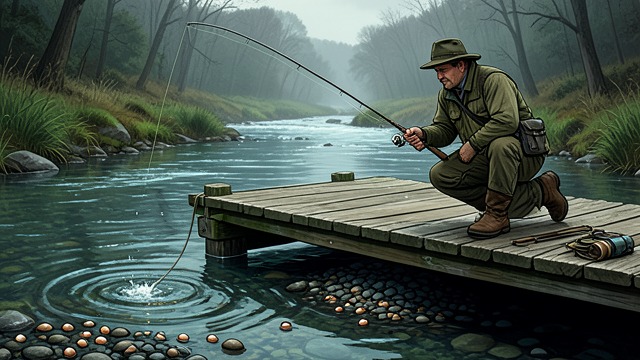
Salmon Reach Their River
Homing Migration
Salmon returned from the Atlantic to the Miramichi River and deposited eggs in gravel beds of cold forest streams. The annual cycle depended on clear water and a dependable supply of stream life.
A Measured Baseline
The Fisheries Research Board of Canada had studied the Northwest Miramichi for several years. Its records made it possible to compare the stream’s fish populations before and after spraying.
Forest Spraying
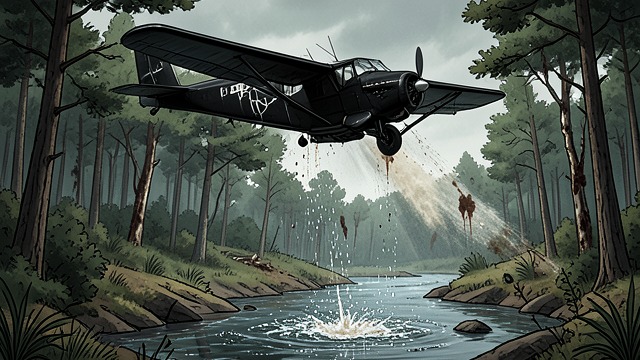
DDT Over the Watershed
A Budworm Campaign
The Canadian program sought to protect forests from Spruce budworm. Aircraft applied DDT over the Northwest Miramichi watershed, with spray drifting and filtering toward streams.
A Broad Exposure
Pilots did not avoid streams or shut off their nozzles above them. The forestry objective thus introduced poison into the habitat on which the fish and their food depended.
The Stream Goes Silent
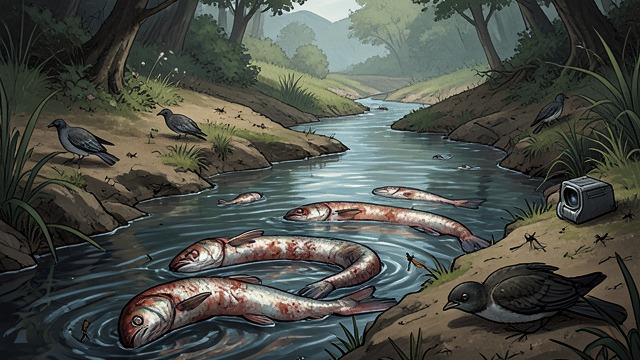
Fish and Insects Die
Immediate Signs
Dead and dying fish, including young salmon and brook trout, appeared along the banks. Birds also died in nearby woods, while aquatic insects that had fed the stream’s fish were lost.
A Broken Food Supply
The damage reached beyond direct poisoning. With caddisfly, stonefly, and other larvae gone, young salmon faced an emptied food web as well as chemical exposure.
A Year’s Spawn Lost
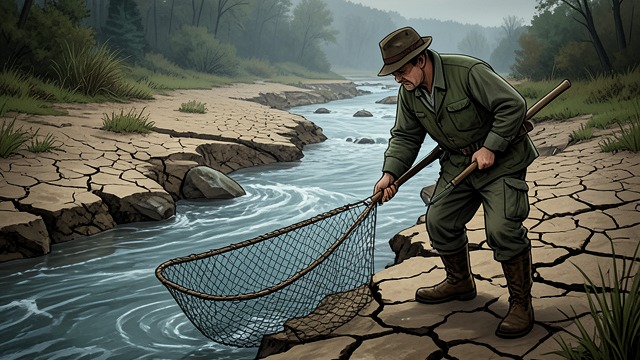
Recruitment Collapses
Young Fish Disappear
No young salmon from that spring’s hatch remained by August. Older age groups also suffered, with losses varying according to their age and exposure.
A Scientific Record
Because baseline counts existed, investigators could estimate the scale of the damage with unusual precision. The episode showed how one spraying could erase a year’s reproductive contribution.
Uneven Recovery
A Fragile Reprieve
An Unusual Cohort
A combination of limited later spraying, returning small insects, and an unusually large 1954 spawning run helped the 1955 fry grow quickly. Some returned as grilse in 1959.
Repeated Damage Elsewhere
Other sprayed streams showed depleted young salmon and reduced runs. The contrast warned that recovery depended on exceptional circumstances, not on spraying being harmless.
Autumn 1953
June 1954
Within two days of the 1954 spraying
By August 1954
From 1955 through 1959
